Illustrative image (Credit: mtaira / Adobe Stock)
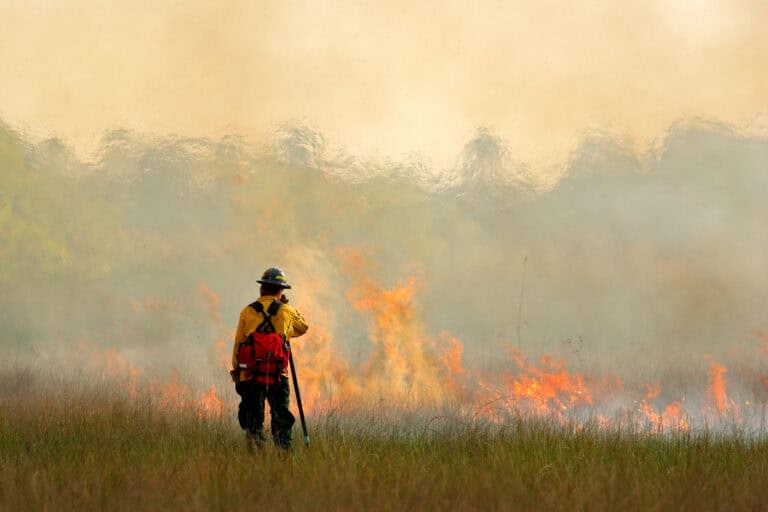
A series of severe bushfires (also called wildfires) scorched vast areas of southeastern Australia in early January, prompting disaster declarations, large‑scale evacuations, and sustained emergency operations. The unprecedented early‑season blazes, driven by record‑breaking temperatures and dry conditions, battered communities primarily across the state of Victoria, with significant spill‑on effects in parts of New South Wales.
What Happened
Bushfires ignited amid a prolonged heatwave, with inland temperatures rising well into the mid‑40 °C (104 °F) range, rapidly drying vegetation and creating extreme fire‑danger conditions. Multiple major fire fronts, including the large Longwood blaze north of Melbourne, have consumed hundreds of thousands of hectares of bushland, farmland, and forests. Emergency warnings initially classified some blazes at the highest danger levels, and dramatic fire behaviour, including pyrocumulonimbus development and wind‑driven spread, complicated control efforts.
The state government declared a State of Disaster in Victoria, unlocking expanded emergency powers, mandating evacuations, and coordinating additional resources, including firefighter deployments from other jurisdictions. Tens of thousands of residents were forced to leave their homes, and extensive infrastructure damage disrupted power supplies and transport links across affected regions.
Consequences and Immediate Challenges
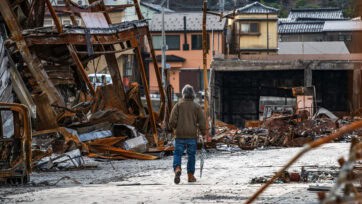
Thankfully, the human toll was low. Hundreds of structures, including homes, farms, and community assets, were destroyed or severely damaged, while extensive livestock losses and compromised regional supply routes further strained rural communities.
Air quality deteriorated sharply across Victoria and into New South Wales and the Australian Capital Territory, leading to health warnings for vulnerable populations and prompting authorities to advise residents to limit outdoor exposure due to smoke and particulate hazards.
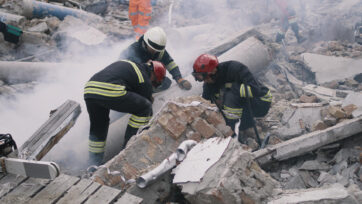
Operationally, firefighting agencies contended with multiple active fire fronts, extreme heat, and erratic winds, with authorities warning that these conditions may persist and that containment could take weeks.
Context and Ongoing Considerations
Meteorologists and emergency planners note that the 2025–26 bushfire season has been fuelled by prolonged drought, extreme heat, and low humidity, conditions consistent with climate‑driven fire‑weather trends that have increased bushfire risk across southern Australia. Whilst seasonal forecasts had anticipated an elevated threat, the scale and intensity of the recent fires outpaced many preparedness assumptions and tested response capacities.
Federal and state governments activated disaster recovery payments and funding frameworks to support affected households, small businesses, and primary producers. Relief centres and assistance programs were expanded to address immediate needs and longer‑term recovery challenges.
Key Lessons Moving Forward
From a systems engineering perspective, the bushfire crisis highlights the interconnectedness of hazard prediction, operational coordination, and community resilience:
Integrated hazard modelling: Enhancing predictive models that combine meteorological, fuel‑load, and landscape data can improve early detection and fire‑behaviour forecasting.
Adaptive resource allocation: Firefighting systems must ensure scalable mobilisation of personnel, aerial assets, and support logistics across rapidly shifting fronts.
Resilient infrastructure: Critical lifelines, including power distribution and transportation networks, require design redundancies and enhanced protection to limit cascading failures under extreme conditions.
Health impact systems: Coordinated air quality monitoring and public‑health advisories help manage population exposure and guide protective measures for at‑risk groups.
Feedback loops: Continuous evaluation of evacuation protocols, inter‑agency communication, and incident response data is essential to refine workflows under acute stress.
References:
Reuters 2026, ‘Australian bushfires raze homes, cut power to tens of thousands’, Reuters, viewed 13 January 2026, <https://www.reuters.com/business/environment/australia-pm-warns-extreme-dangerous-weather-bushfires-rage-victoria-2026-01-09/>
Kolovos, Benita 2026, ‘More than 500 structures destroyed in Victoria’s bushfires as 12 major blazes continue to burn’, The Guardian, viewed 13 January 2026, <More than 500 structures destroyed in Victoria’s bushfires as 12 major blazes continue to burn>
Kolovos, Benita 2026, ‘Homes of volunteer firefighters among 350 structures lost so far in ‘heartbreaking’ Victorian bushfires’, The Guardian, viewed 13 January 2026, <Homes of volunteer firefighters among 350 structures lost so far in ‘heartbreaking’ Victorian bushfires>
Sky News 2026, ‘State of disaster declared as Australia battles bushfires during extreme heatwave’, Sky News, viewed 13 January 2026, <‘State of disaster’ declared as Australia battles bushfires during extreme heatwave>
Dingwall, Doug 2026, ‘Winds push bushfire smoke north, triggering air quality and health warnings for Victoria and NSW’, ABC News, viewed 13 January 2026, <Residents urged to limit time outdoors as smoke pushes north from bushfires>