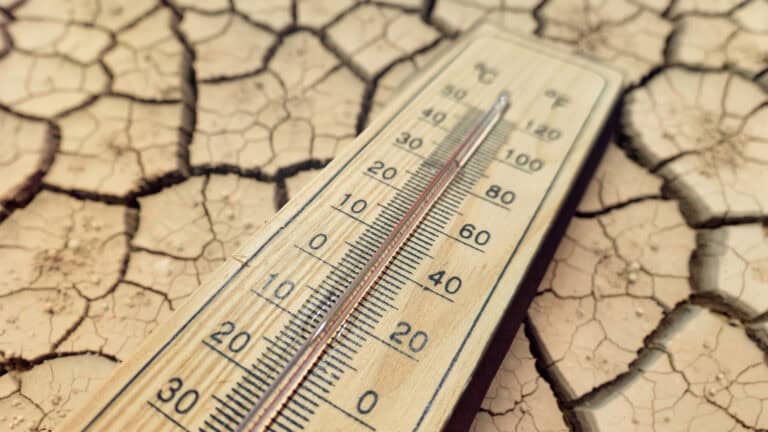
Illustrative image (Credit: Татьяна Швец / Adobe Stock)
An exceptionally early and intense heatwave swept across Western Europe in late May 2026, bringing record-breaking temperatures, heat-related fatalities, and widespread public health concerns. Countries including France, Spain, Portugal, the United Kingdom, Italy, and Germany experienced temperatures more commonly associated with mid-summer, despite the event occurring before the official start of the European summer season.
Meteorologists attributed the event to a powerful “heat dome” that trapped hot air over much of the continent, causing temperatures to soar 10–15°C above seasonal averages in some regions. Several countries recorded their hottest May temperatures on record, while authorities issued heat warnings and emergency advisories affecting millions of people.
What Happened
The heatwave developed during the final week of May as a large area of high atmospheric pressure became established across Western and Central Europe. This weather pattern effectively trapped warm air originating from North Africa, preventing cooler systems from entering the region and allowing temperatures to steadily increase over several days.
France experienced some of the most extreme conditions, with temperatures reaching approximately 39°C in several areas and more than 350 towns recording their highest May temperatures ever observed. The United Kingdom recorded its hottest May day on record, with temperatures exceeding 35°C in London. Spain, Portugal, and Italy also reported unusually high temperatures, with some locations approaching or exceeding 40°C.
Authorities across Europe activated heat warning systems, issued public health alerts, and advised residents to limit outdoor activity during the hottest periods of the day. In some regions, restrictions were placed on outdoor work and sporting activities due to elevated heat-related risks.
Satellite imagery from the European Space Agency’s Sentinel-3 mission highlighted the scale of the event, showing extensive areas of abnormally high land surface temperatures across much of the continent.
Consequences and Immediate Challenges
The heatwave resulted in multiple fatalities across Europe, with deaths linked to heat exposure, sporting activities, and drownings as people sought relief from the unusually high temperatures. Emergency services reported increased demand, particularly among vulnerable populations including the elderly and those with pre-existing health conditions.
The event also exposed challenges associated with infrastructure and public preparedness. Many European cities and buildings are designed primarily for colder climates and are not well adapted to prolonged periods of extreme heat. As a result, cooling capacity, public facilities, and emergency response systems were placed under additional strain.
Agricultural sectors in several countries reported concerns regarding crop stress and water availability, while authorities monitored increased wildfire risks due to dry conditions and elevated temperatures. Governments and meteorological agencies warned that similar events are expected to become more frequent and intense in the future.
The heatwave was particularly notable because of its timing. Experts described the event as highly unusual for late spring, with some climatologists characterising it as an exceptionally rare occurrence under historical climate conditions.
Key Lessons Moving Forward & Systems Engineering Perspective
From a systems engineering perspective, the European heatwave highlights several important considerations for managing complex climate and infrastructure systems:
- Climate resilience and adaptation: Infrastructure systems must be designed or upgraded to operate effectively under increasingly frequent and severe temperature extremes.
- Public health system preparedness: Healthcare services, emergency response agencies, and community support networks require scalable plans for managing heat-related emergencies and protecting vulnerable populations.
- Integrated environmental monitoring: Satellite observations, weather forecasting systems, and real-time environmental monitoring provide critical data for early warning and decision-making.
- Urban systems design: Cities can improve resilience through heat-mitigation strategies such as green spaces, reflective materials, improved building design, and expanded cooling infrastructure.
- Critical infrastructure robustness: Power networks, transportation systems, water supplies, and communication services must remain operational during prolonged periods of extreme heat and increased demand.
- Cross-sector coordination: Effective heatwave response requires coordination between meteorological agencies, governments, healthcare providers, utilities, and local communities to ensure timely information sharing and resource allocation.
- Long-term risk management: As climate-related hazards become more frequent, organisations must incorporate future climate projections into planning, investment, and infrastructure lifecycle management to improve overall system resilience.
References:
Morgan, Thomas 2026, ‘At least 11 dead as Europe bakes in unprecedented heatwave’ ABC News, viewed 2 June 2026, <https://www.abc.net.au/news/2026-05-27/europe-swelters-through-record-breaking-may-heatwave/106725240>
Nightingale, Alice 2026, ‘Weather tracker: deadly May heatwave shatters records across Europe’ The Guardian, viewed 2 June 2026, <https://www.theguardian.com/environment/2026/may/29/weather-tracker-deadly-may-heatwave-shatters-records-across-europe>
Henley, Jon 2026, ‘Seven heat-related deaths in France as May records set in several countries’ The Guardian, viewed 2 June 2026, <https://www.theguardian.com/world/2026/may/26/deaths-france-linked-record-high-temperatures>