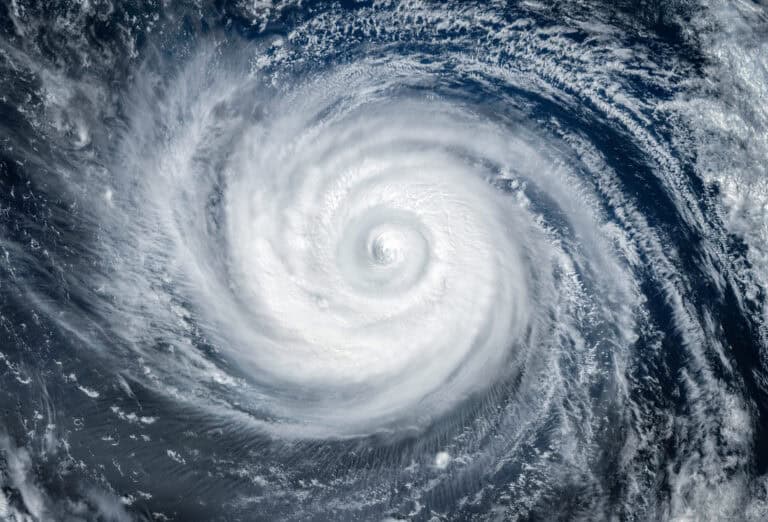
Illustrative image (Credit: Tryfonov / Adobe Stock)
Severe Tropical Cyclone Vaianu swept across New Zealand’s North Island in April 2026, bringing destructive winds, heavy rainfall, and widespread disruption. The storm, classified as a powerful Category 3 system earlier in its lifecycle, made landfall after tracking south through the Pacific, triggering flooding, power outages, and large-scale evacuations across multiple regions.
With wind gusts exceeding 130 km/h and intense rainfall impacting already vulnerable areas, authorities described the event as “potentially life-threatening,” prompting emergency responses and state-of-emergency declarations in several districts.
What Happened
Cyclone Vaianu formed in early April in the South Pacific before intensifying into a severe tropical cyclone and tracking toward New Zealand. After impacting island nations including Fiji, the system reached the North Island of New Zealand around 11–12 April, making landfall near the Maketu Peninsula.
As the cyclone moved across the island, it brought a combination of hazardous conditions including strong winds, heavy rain, and coastal swells. Rainfall totals exceeded 200 mm in some regions, while wind gusts above 130 km/h caused structural damage, uprooted trees, and widespread power outages.
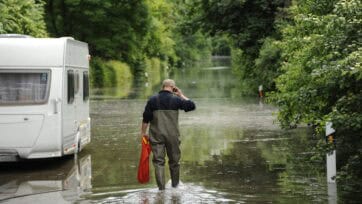
Flooding quickly developed across low-lying and coastal areas, with towns such as Whitianga and regions across the Coromandel Peninsula and Bay of Plenty experiencing inundation. Authorities issued evacuation orders affecting hundreds of residents, while civil defence centres were activated to support displaced communities.
The cyclone also caused major infrastructure disruption, including road closures, flight cancellations, and electricity outages affecting thousands of homes.
Consequences and Immediate Challenges
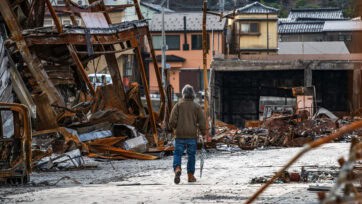
Although the cyclone weakened as it moved further south, its impacts were significant and widespread. Flooding, landslides, and damaged infrastructure created immediate challenges for emergency services and local communities.
Power outages affected thousands of households, with some regions experiencing prolonged disruptions due to damaged transmission lines and fallen trees.
Transportation networks were also heavily impacted, with flooded roads, debris, and cancelled flights limiting movement and delaying emergency response efforts.
In the days following the cyclone, additional heavy rainfall compounded the situation, particularly in areas like Wellington, where flash flooding and landslides triggered further evacuations and emergency responses.
The event also highlighted the concept of “compounding disasters,” where multiple weather systems occur in close succession, amplifying overall impact and recovery challenges.
Despite the severity of the storm, early warning systems and evacuation planning helped minimise loss of life, demonstrating the effectiveness of coordinated. emergency management.
Key Lessons Moving Forward & Systems Engineering Perspective
From a systems engineering perspective, Cyclone Vaianu highlights several critical considerations in managing complex natural hazard systems:
Multi-hazard system interactions: Cyclones often trigger cascading effects, including flooding, landslides, and infrastructure failure, requiring integrated system-level planning rather than isolated hazard responses.
Resilience of critical infrastructure: Power grids, transport networks, and communication systems must be designed to withstand extreme weather events and recover rapidly following disruption.
Early warning and response systems: Accurate forecasting, real-time monitoring, and clear communication channels are essential for enabling timely evacuations and reducing risk to human life.
Redundancy and system robustness: Infrastructure systems should where cost-effective incorporate redundancy to maintain functionality even when individual components fail.
Climate adaptation and forecasting: Increasing frequency and intensity of extreme weather events require adaptive system design, incorporating climate modeling and long-term risk projections.
Emergency coordination frameworks: Effective disaster response depends on coordination between government agencies, emergency services, and local communities, supported by clear operational structures.
Recovery and system restoration planning: Post-event recovery must be considered as part of the overall system lifecycle, ensuring rapid restoration of essential services and long-term resilience improvements.
References:
Chen, Christine 2026, ‘Cyclone lashes New Zealand’s North Island, hundreds evacuated’, Reuters, viewed 22 April 2026, <https://www.reuters.com/sustainability/climate-energy/cyclone-lashes-new-zealands-north-island-hundreds-evacuated-2026-04-12/>
ABC News 2026, ‘Floods and damage as Cyclone Vaianu makes landfall in New Zealand’, ABC News, viewed 22 April 2026, <https://www.abc.net.au/news/2026-04-12/cyclone-vaianu-makes-landfall-in-new-zealand/106555766>
Hastings District Council 2026, ‘Cyclone Vaianu update’, Hastings District Council, viewed 22 April 2026, <https://www.hastingsdc.govt.nz/cyclone-vaianu/article/3806/cyclone-vaianu-update-13-april-2026?>
Climate Centre 2026, ‘New Zealand floods illustrate compounding and cascading climate risk’, Climate Centre, viewed 22 April 2026, <https://www.climatecentre.org/17041/new-zealand-floods-illustrate-compounding-and-cascading-climate-risk/>