

Welcome to the new home of INCOSE Systems Engineering Professional (SEP) exam preparation training, now delivered by PPI. Same training, same people, different home!
INCOSE SEP Exam Preparation (ISEP) Course
Over the course of 5 days, led by an experienced and qualified facilitator, you will be taken on an immersive journey into the INCOSE Systems Engineering Handbook (Fifth Edition). This course will prepare you to take the INCOSE Knowledge Exam comfortably and covers all the information you need to know about applying for INCOSE’s Associate Systems Engineering Professional (ASEP) or Certified Systems Engineering Professional (CSEP) certification.
- 5 Days
- Public delivery (Online)
- Corporate delivery (In-person or online)
- Retake the course free of charge if you don't pass your first exam!
Get Started Today
View the schedule and register your interest.
Let's Talk
Whether you have a question or are looking to find out more about our training options then please get in touch with us below.
- Overview
- Full Schedule
- Course Outline
- Learning Objectives
- FAQ
About the course:
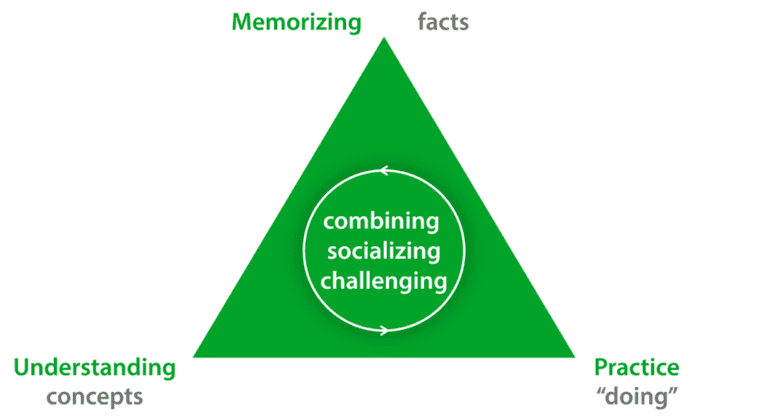
Led by an expert in systems engineering with deep knowledge of the SEP certification, our ISEP Course blends presentations, discussions, workshops, and extensive exam practice for a dynamic and rewarding path to SEP certification. Employing advanced adult learning strategies, we aim for participants to efficiently learn and remember the information needed to pass the INCOSE Knowledge Exam on their first try. If not, you can retake the course at no extra cost.
Throughout the course, we’ll explore the role and advantages of systems engineering using the INCOSE Systems Engineering Handbook Fifth Edition, preparing you not just for the exam but for practical application in your work.
Our real-time classes are delivered live online, ensuring an interactive learning environment. After enrolling, you’ll get all necessary details and electronic course materials, with additional resources emailed during the course.
Course recognition:
- This course qualifies for Engineers Australia and Engineering New Zealand (IPENZ) CPD purposes (40 hours)
- PDUs may be claimed for this course for PMI’s family of certifications, including Project Management Professional (PMP)
- This course may be credited toward the maintenance of the Project Management Institute (PMI) certifications. Suggested PMI Talent Triangle® PDU allocation:
- Ways of Working – 29
- Power Skills – 1
- Business Acumen – 10
*As verified by the Coaching Café South Africa.
Course prerequisites:
The INCOSE SEP Exam Prep course is designed to empower participants with the knowledge and skills necessary to pass the INCOSE Knowledge Exam, required for attaining ASEP or CSEP certification.
While the course is comprehensive and structured to be accessible to individuals at various levels of expertise, participants with prior experience in systems engineering often find it easier to connect with the material on a deeper level, thereby enhancing their learning experience. Having prior experience in systems engineering can also enhance the understanding of the content in the INCOSE Systems Engineering Handbook, thereby increasing the likelihood of passing the Knowledge Exam. However, it’s important to note that prior SE experience is not a requirement for attending the course or attempting the INCOSE Knowledge Exam.
After passing the exam, no experience needs to be demonstrated to attain ASEP certification; however, for CSEP certification, a minimum of 5 years of SE-related experience is required.
We warmly welcome all aspiring professionals who are eager to embark on or advance their journey in SEP certification to attend our INCOSE SEP Exam Prep course.
Note: We strongly recommend having a hard copy of the INCOSE Systems Engineering Handbook for the course. Instructions on acquiring one will be provided. If you encounter any issues getting a copy, please inform us promptly, and we’ll assist you. If a hard copy is unattainable, a digital version will also work.
Let's Talk
Whether you have a question or are looking to find out more about our training options then please get in touch with us below.
Interested in corporate delivery? Click the ‘Let’s Talk’ button above and enquire today!
Upcoming Courses
Register to improve performance and drive projects forward with proven principles, practical methods and expert instruction.
Have a team of 5 or more? Bring PPI training to your workplace, on-site or online with corporate training, building shared understanding and strengthening your team's ability to deliver simple to complex systems with precision and confidence. Click here to enquire about Corporate Training.
(Limited places)
(Limited places)
(Exclusive to South America)
(Limited places)
(Exclusive to South Africa)
(Exclusive to South America)
(Exclusive to South Africa)
(Exclusive to South America)
(Exclusive to South Africa)
(Exclusive to South America)
Upcoming Courses
Register and pay 30 days prior to the course commencement date to receive a 10% early bird discount. Or register a group of 3+ for a 10% group discount. Available for corporate training worldwide.
Are you a full-time student? Enter the coupon code STUDENT_DISCOUNT at checkout to receive a 20% discount. Note that proof of full-time student status is required.
(Limited places)
(Limited places)
(Exclusive to South America)
(Limited places)
(Exclusive to South Africa)
(Exclusive to South America)
(Exclusive to South Africa)
(Exclusive to South America)
(Exclusive to South Africa)
(Exclusive to South America)
1.1 What is SE?
1.2 Why is SE important?
1.3 Systems Concepts
1.4 Systems Engineering Foundations
1.5 Systems Science and Systems Thinking
2.1 Life Cycle Terms and Concepts
2.2 Life Cycle Approaches
2.3 System Life Cycle Processes
3.1 Quality Characteristics and Approaches
3.2 Systems Engineering Analyses and Methods
4.1 Tailoring Considerations
4.2 SE Methodology/Approach Considerations
4.3 System Types Considerations
4.4 Application of Systems Engineering for Specific Product Sector or Domain Application
5.1 Systems Engineering Competencies
5.2 Diversity, Equity and Inclusion
5.3 Systems Engineering Relationships to Other Disciplines
5.4 Digital Engineering
5.5 Systems Engineering Transformation
5.6 Future of SE
6.1 Case 1: Radiation Therapy – the Therac-25
6.2 Case 2: Joining Two Countries – the Øresund Bridge
6.3 Case 3: Cybersecurity Considerations in Systems Engineering – the Stuxnet Attack on a Cyber-Physical System
6.4 Case 4: Design for Maintainability – Incubators
6.5 Case 5: Artificial Intelligence in Systems Engineering – Autonomous Vehicles
6.6 Other Case Studies
- Daily Quiz Questions
- Sharing of Personal Project Experience
- What is a System?
- Definition of Systems of Systems
- Enabling Systems
- Definition of Systems Engineering
- Use and Value of Systems Engineering
- Generic Life Cycle
- Applying the Handbook to Case Studies
- Linking IPO Diagrams to Each Other
- Verification vs. Validation
- Concept of Operations vs. Operational Concept
- Technical Processes
- Technical Management Processes
- Comparison of Project and Organizational Processes
- Measurement Process
- Pulling It All Together – System Perspective
- Agreement Processes
- Organizational Project-Enabling Processes
- Knowledge Management Process
- Tailoring Process
- Quality Characteristics and Approaches
- Comprehension Style Questions on Quality Characteristics and Approaches
- Systems Engineering Analyses and Methods Part One
- Systems Engineering Analyses and Methods Part Two
- Systems States and Modes
- Uncertainty and Cognitive Bias
- SE Principles and Heuristics
- Technical Reviews and Audits
- Traceability
- Patterns
- Digital Engineering
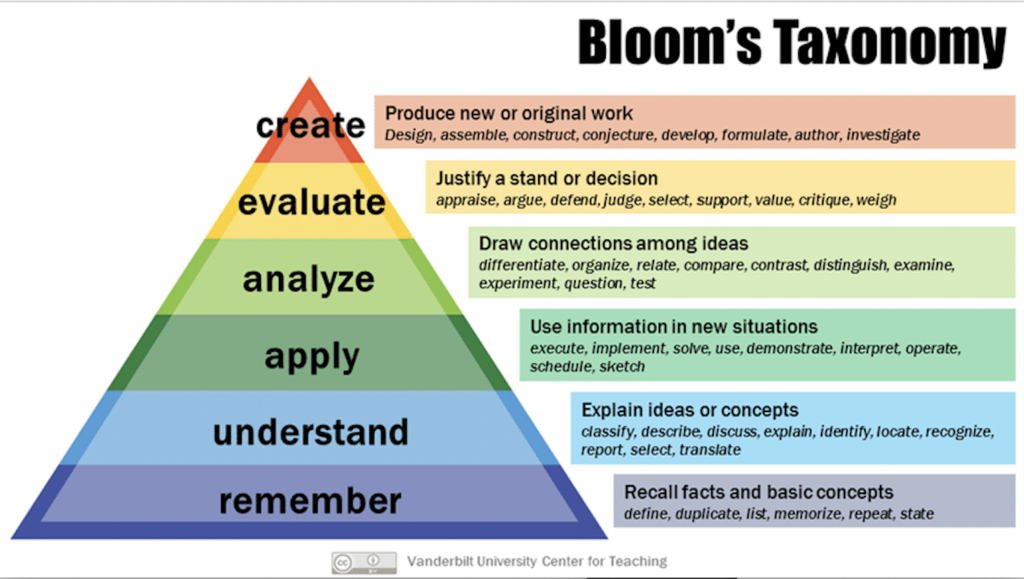
At the end of the course, the participant will confidently be able to:
- evaluate the Handbook and training materials in such a way as to successfully prepare for and pass the examination
- analyze the key purposes, processes, activities, and relationships of the ISO/IEC/IEEE 15288 generic life cycle processes
- apply the terminology in the INCOSE Systems Engineering Handbook correctly
- relate the INCOSE material, approach and methodology to their existing Systems Engineering knowledge
- explain the elements of the system life cycle and how they relate to projects
- explain the different technical processes that support the system life cycle
- explain the different technical management processes and the role they play in planning, assessing and controlling a system development
- explain tools and techniques to enhance decision-making throughout the system life cycle
- explain the agreement processes and how they influence the system life cycle
- explain the organizational level processes and how they relate to continuous improvement
- explain the relationship between organizational level and project level processes
- explain the tailoring process at organizational and project levels
- recognize the application of systems engineering in different domains
- appreciate the importance of quality characteristics and related approaches
- appreciate the application of systems engineering analyses and methods
- explain the role of systems engineering on the basis of a project or intervention within their organization
- interpret the knowledge gained via reference to examples/cases from their own industry or organization
- evaluate current and future systems engineering activities using the INCOSE Systems Engineering Handbook 5th Edition as a reference and guide
- apply case studies to show how processes may be relevant in the real world.
INCOSE Handbook FAQ
The 4th edition of the handbook is deliberately aligned to the structure of the ISO/IEC/IEEE 15288:2015 standard. The process names and process purpose statements are directly copied from the standard. INCOSE provided a model for implementing the principles of the standard, supplemented by chapters on subjects such as life cycle stages, tailoring, cross-cutting methods, and specialty engineering.
The parent ISO standard includes “Systems and software engineering” in its title, whereas the handbook only mentions systems in its own title.
We consider that all of the principles of systems engineering can be applied to a project that happens to involve software in its solution, and equally to a project that only involves software.
Not in detail. It treats element design as a black-box process. Each technology (or capability, more broadly speaking) has evolved its own body of knowledge (e.g. for electronics or hydraulics). The handbook does not need to reproduce this; it provides the glue that enables systems to be created from a range of element types.
No. Other organizations have produced systems engineering guidance material (for example NASA and ESA, or, in a web-based implementation, SEBoK). Each authoring team may have chosen different vocabulary and different process boundaries, but they all have broadly the same objective.
One of INCOSE’s aims is to create a global community of systems engineers. Agreeing on process boundaries and vocabulary would help in achieving that, but it will undoubtedly be a slow journey.
The handbook accepts that there are different ways of understanding the term “systems engineering”. It delineates three main ways: perspective, process, and profession.
In terms of process, it covers much more than “just doing” the engineering. We suggest that the headings for Chapters 4 to 7 allow us to infer a much broader scope:
- Defining and solving the problem (“doing the work”);
- Managing the work;
- Managing acquisition and supply relationships;
- Achieving systematic improvement at organizational level.
There is no single “best order”. It is very common for processes to be invoked in parallel. It is important to define an execution path that is optimal for your particular project, which will be a trade-off between various success factors.
The book has to be printed in chapter order, but that does not mean the processes have to be executed in chapter order.
The chapter order may be helpful in terms of understanding the logical relationships between processes.
We have found that, overall, the links between process areas make sense, with perhaps a few anomalies.
In general, the inputs and outputs are represented without any particular state. (System architecture description, for example, could be up-issued a number of times on a project, but this is not explicitly represented in the IPO model).
A small number of inputs and outputs have explicit states defined, for example Final RVTM, Initial RVTM, and Updated RVTM. The reason for this is not entirely clear, but it is worth appreciating this when revising for the exam. This could perhaps be addressed on the next update of the handbook.
Almost certainly. Version 3.2.2 was released in 2011, and Version 4 in 2015. Appendix G in the 4th Edition can be used to submit comments to the authors. Estimated publishing of the handbook will be 3-5 years (2021-2023). The primary driver is alignment with ISO15288:202x, which will not be initiated for 2-3 years (estimated). Also to date there have not been major comments thus far to move to an earlier release.
Appendix E indicates that “Procedures” arise from any life cycle process. These are inputs to PAC as the bases for “Assessment” of the project, i.e., an assessment of whether the project is conforming to these processes. Although Appendix E lists “including integration …. disposal”, there are other processes whose procedures we may include as an input to PAC such as 5.3 Decision Management and 8.1 Tailoring. This is a challenge to the content of the handbook and not the level of detail you would be expected to know for the examination but it is still good to consider. Ultimately, the content of the handbook should always be adapted, as with standards, to your organization, not the other way around.
Food for thought: At a higher level of abstraction, we also need to assess conformance to processes. Hence “processes” should be an input to PAC but we don’t see it here in the IPO. The set of tailored processes is disguised within the SEMP however the SEMP doesn’t show up as an input to PAC either.
ISEP Application Form FAQ
Guidance can be found on the INCOSE Website. If that doesn’t give you a clear answer, you could email INCOSE directly.
You must have at least three references, and each career period claimed must have at least one reference. It is quite common to have overlaps between references, and references that cover more than one period. Each reference must meet the criteria listed in Section 6 of the application form.
There isn’t a correct answer, but you should find that there is a natural way of defining breakpoints that makes it easiest to tell your story (history). Perhaps you moved companies, changed departments, started on a new project, got a promotion, changed roles, or took a career break.
Not necessarily, and they do not need to call themselves systems engineers or be INCOSE members. Nevertheless, they need to convince the review panel that they appreciate the concepts of systems engineering, and have been involved in work that can be described in systems engineering terms.
The guidance on the application form is to “include the depth of full detail typically provided on a job resume about SE tasks/functions you performed and the products produced”. Be specific about your own contribution to the value generated. It is not helpful to say that you “worked on the system architecture”, or that you “were part of a system architecture team”. If you are specific about the projects you worked on, the tasks you performed, and the work products you generated (without divulging sensitive information), this will help to convince the review panel.
There is no limit as to how much you may write but structure your writing well and be succinct, so that the review panel can quickly understand the evidence presented.
It is fully accepted that people work on several “SE Functional Areas” in parallel, and that is highly unlikely that people have booked their time against this breakdown. You need to use your own judgement as to how you apportion your time against the functional areas. You need to be comfortable in your own mind that this is a fair representation of how you focused your effort during that career period. This split also needs to be largely supported by statements from your references. There is a guide containing instructional information for completing the application. This can be found here.
You must apportion the time as you feel is justified; you cannot double account for the time. The total number of months claimed for a given period must not exceed the elapsed calendar months for that period. It is not uncommon for people to claim less, for various reasons.
Yes: if the number of months in the bottom right side of the experience table is exactly 60, this is considered sufficient. Most applications exceed 60, which is helpful should some of the evidence presented be discounted or questionable.
CTI suggests that you spend some time talking to your references about what is expected. They should corroborate your submission with specific reference to your contribution in terms of activities and work products. They should also confirm the number of months spent on Work Areas, at least for the three primary areas. They are not restricted with how much they may write, but ask them to structure it well and be succinct, so that the review panel can quickly understand the evidence presented. Please refer to forms 4A and 4B here.
You will get feedback from the review panel, indicating where there is a shortfall in the evidence provided, which could be in your submission or in the information provided by your references. You may be invited to address these areas and resubmit within a given timescale.
FAQs on the knowledge exam – INCOSE
The standard time is 2 hours, but if English is not your first language, or you have special needs, you may ask INCOSE for an additional 30 minutes. You would need to complete the INCOSE certification Special Accommodations form. The “Special Accommodations Form” can be found here.
The majority of exams are computer-based. These take place at “Prometric” facilities, which are quite well distributed around the world. Sometimes, INCOSE organizes sessions where people from a local geography can take a written exam.
No, you will have to leave all personal possessions in a locker before entering the exam room. You will, however, be given a sheet of paper and pencil(s), should you wish to do a “brain dump” during the familiarization time that is allowed before starting the test.
No. There are helpful navigation tools that allow you to choose your own path. However, it may be helpful on the first pass to go through the questions in sequence.
You can mark it for later review, move on to other questions, and re-visit it later if you have t
At any time during the exam you can re-visit questions and change your answer. Your selections are not finalized until you press “Submit” at the end of the test.
You may leave the room at any time, and return later, but the countdown timer will still be running.
The answer to this is intangible, and it depends on understanding INCOSE’s process of creating questions. The questions are carefully designed to discriminate between those who can demonstrate the knowledge, and those who can’t. The questions are methodically reviewed by an experienced panel. There are no trick questions!
No. In fact, INCOSE’s stated intent is that experienced systems engineers should be able to pass, even if they haven’t seen the handbook. Nevertheless, the questions are all written around the language of the book, and with reference to the process diagrams in the book. So being familiar with the book will help you to answer questions quickly and with confidence. Most questions include an element of understanding of the principles, in which case memorization only will not be enough.
Practical experience will be especially helpful when the question hinges on the understanding of first principles, and where you are indecisive choosing between two very similar answers.
During your revision period, your practical experience will help you because linking theory to practice is an important aspect of adult learning.
- “Suspend your disbelief” – all correct answers trace to text in the handbook.
- Use Appendix G of the handbook to submit feedback to the authors; the handbook evolves and depends on feedback for its continual improvement.
Our suggested shortlist:
- The overall structure of the process set;
- The name and purpose statement for each process;
- The activities for each process;
- The most significant inputs and outputs for each process;
- The predominant connections between processes via inputs and outputs;
- Bullet points and lists within the text of each process description.
You are allowed up to three attempts through Prometric for a period of 12 months starting from date of payment for your SEP application. Each attempt will require you to pay another fee to Prometric.
If you take the computer-based test, and are not successful, you will get a fairly high-level summary of which sections of the book need more attention on a future attempt. We understand that this is not the case for a written exam.
No. So if you have some tricky questions left over at the end, put down your “best guess”.
No. Anything less than the required number of correct answers scores zero.
The certification examination questions are currently multiple-choice questions. All correct answers must be selected from the possible answers given to receive credit for answering a question. A typical question may have five possible answers listed of which three are correct. Partial credit is not given for a question.
Yes. The question structure enforces a standard way of making this clear. If there are multiple answers it will say (choose x). Part of the review process should be used to ensure this has been achieved.
No. Those taking the exam are required to sign a form that commits them never to disclose details of the questions presented.
INCOSE deliberately does not comment on the pass mark.
Our understanding is that, apart from Germany, which has special agreements with INCOSE, all exams are at present given in English. If English is not your first language, you may request an additional 30 minutes of test time. (see question 1.)
It is safe to say that the majority of questions will concern Chapters 4 to 7, but you should also expect some questions around the outer chapters.
ISEP Exam Prep Course FAQ
We are used to running classes at a range of sizes. A normal expectation might be somewhere in the range of 6 – 20.
In our experience, every single hour of the 5 days is utilized, with occasionally finishing up a very short time before the stipulated conclusion time on the last day of the course. There is extensive material coverage, and we frequently spend time reinforcing the learning with questions and interactive activities.
We typically get very positive feedback, from which indicates that the 5 days were well spent. In fact, it is not uncommon to receive feedback saying that the course should last two weeks!
No. We change the style of the course quite frequently, based on adult learning principles. People learn in different ways, and we often receive feedback from participants saying that they enjoyed the variety of approaches used. There are times when we present the principles, but where possible we prefer a more interactive approach.
We ask participants to suggest examples relevant to their work in order to make the theory more relevant.
It would be advantageous to skim-read the handbook prior to attending the course. A broad familiarity with the handbook beforehand will help with the learning curve.
The electronic version of the handbook is available for free from INCOSE when you become an INCOSE member.
By default, a hard copy of the handbook is given to each participant on the first day of the course. Arrangements can be made to deliver it in advance if required.
This is unlikely; in our experience, most people put in some revision time before taking the exam. It is difficult to say how much, but 30 hours may be a fair guide. However, one particular participant passed the exam on the Tuesday following the course. A gap of 3 months might be typical. We would urge you to think about sitting the exam within a few weeks of the course completion.
Yes; we are available to assist with any queries as you prepare for the exam.
Yes, particularly if an on-site course was conducted for your organization. We encourage people to keep a living list of improvement ideas as we progress through the course. This means that you can have a mini-improvements plan to take away at the end.
At the same time, the presenters have to be careful not to let discussions dwell on in-house issues, because there is a lot of core course material to get through.
Not extensively. There are some methods mentioned in the handbook referring to supporting tools. There is also material in Chapter 9 on cross-cutting methods (which includes MBSE), but the coverage of each method is at quite a high level.
The majority of the time is spent on the principles and processes of systems engineering.
This includes:
- About INCOSE;
- How to revise for the exam;
- How to take and pass the exam;
- How to submit the experience element of a CSEP application;
- How to engage in Continuing Professional Development, and the expectations for that;
- Additional elaborations on selected topics that our presenters can provide as time permits.
This includes:
- The course manual;
- The handbook;
- Workshop worksheets;
- A set of handouts;
- A set of flash cards for memorizing terms and abbreviations;
- A minimum of 3 sets of practice questions;
- A mini-improvements plan if you were able to develop it during the course.
Featured Course Reviews
Thank you for offering such a comprehensive course. I found the material really useful and definitely feel that I am in a better position to take the test after attending the course.

Participant | USA
Booz Allen Hamilton
An excellent course with a great mix of presentation and interaction. The presenter never had us doing the same thing long enough for us to lose focus or interest.


James Morton | UK
BAE Systems
The ISEP exam preparation course has led to over 30 of our engineers becoming INCOSE ASEPs, leading to CSEPs and also ESEP.

Participant | UK
BAE Systems
The broad overview and the insight on the PM side was good. I also enjoyed the team management module together with the acknowledgement of the realism required in project planning.

Participant | South Africa
Carl Zeiss Optronics Pty Ltd
Good balance of presentation and workbook/workshop activities. I liked the training style a lot.

Participant | Australia
Live-Online
I have learned the concepts and a lot of processes and methodologies. They will be very useful for me to do a good job.

Participant | China
AVIC
Certification Training Live-Online
Harness the power of systems engineering for business benefit with PPI’s ISEP training, which has received accolades from many of the world’s leading companies for its high value-adding, practical approach to preparing for systems engineering certification. Our approach is based on 20 years of demonstrated adult-learning principles and our aim is for you to attain certification in the shortest possible amount of time, while leveraging the maximum potential from your systems engineering certification.
PPI’s ISEP training is delivered Live-Online, both corporately and publicly, in time zones of many locations worldwide. It is also available for in-person delivery corporately.
Why our ASEP/CSEP preparation course is world leading
Interactive
We deliver practical learning solutions in an interactive yet small group setting. There is a variety of practical exercises and group work sessions throughout the five days. We regularly hear feedback that our course is fun!
Specialist
Facilitated by Systems Engineering practitioners who collectively have decades of experience who themselves are CSEP or ESEP. Content designed by adult learning experts.
Support
We provide you with learning aids and other useful resources so you can begin studying immediately. Our Facilitators are available to answer any questions you may have in the lead up to the exam.
32
Countries
116
Courses
3600
Participants
Our clients

“A comprehensive preparation course that catered to various learning styles and backgrounds, led by an experienced instructor with real-world knowledge.”
Participant from Australia,
Cubic Transportation Systems

“A very valuable learning experience; well-taught and facilitated. The instructor was very knowledgeable well-prepared, pleasant and accommodating.”
Participant from the US,
Booz Allen Hamilton

“Thanks again for the best preparation course. Thanks to you, I felt really comfortable in studying the handbook and finally taking the exam.”
Participant from Sweden,
Consoden

“The best thing was the excellent review of the applicable terminology and learning how to study what is important for the test.”
Participant from the US,
Boeing


Our partners
BlueKei Solutions Private Limited
BlueKei Solutions provides consulting in establishing Digital Engineering practices and advancing systems engineering knowledge through customized training.




More Courses For You
A Business Introduction to Systems Engineering 1-Day
Improve enterprise performance
AI for Systems
Engineering
Learn to benefit from AI within systems engineering practice
Architectural
Design
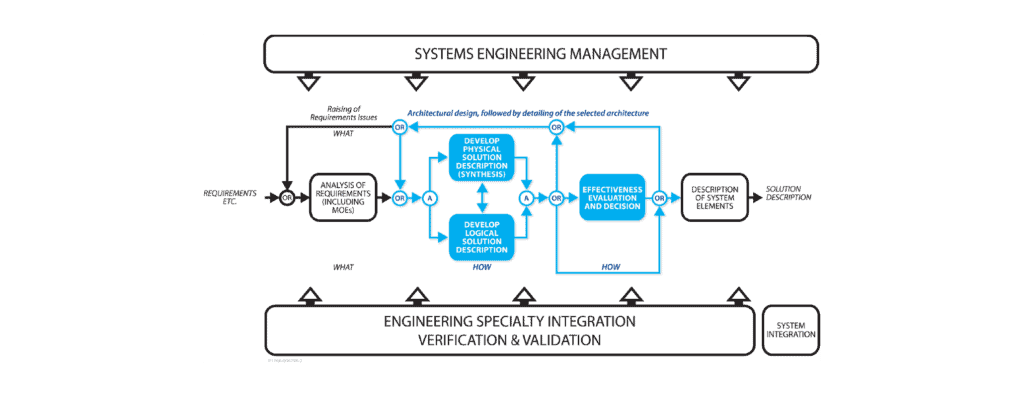
Establish & maintain strong system solution relationships
INCOSE SEP Exam Preparation Course 5-Day

Achieve INCOSE SEP Certification
Interface Engineering & Management 2 Days or 4 Half-Days
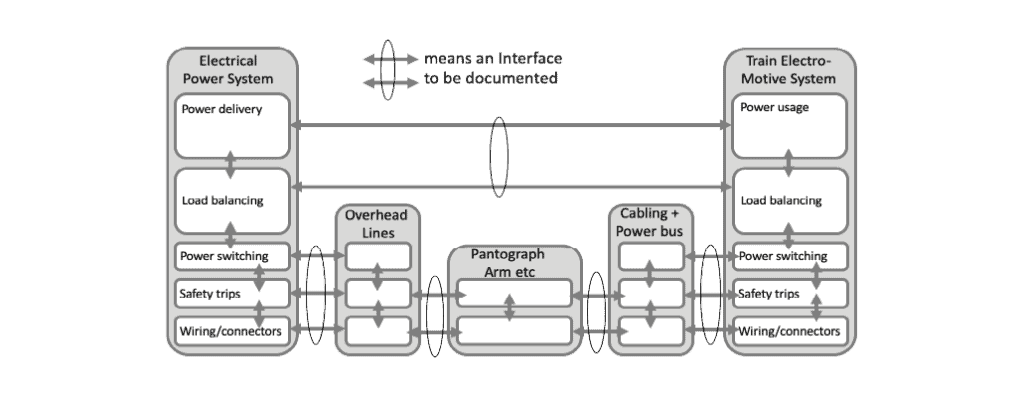
Avoid interface problems
Model-Based Systems Engineering (MBSE) Foundations 2-Day
Organize your information in standard models for power & reuse
Systems
Engineering
Fulfilling the promise of innovation on demand
Systems Engineering Executive Overview Half-Day
ROI of SE practices
Systems Engineering Management 5-Day
Achieve SE & Program/Project Management alignment
Systems Engineering Overview 3-Day
Develop system solutions