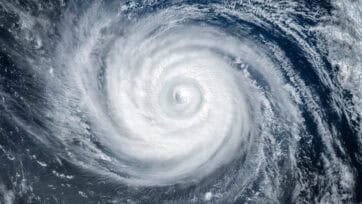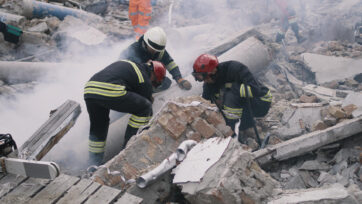
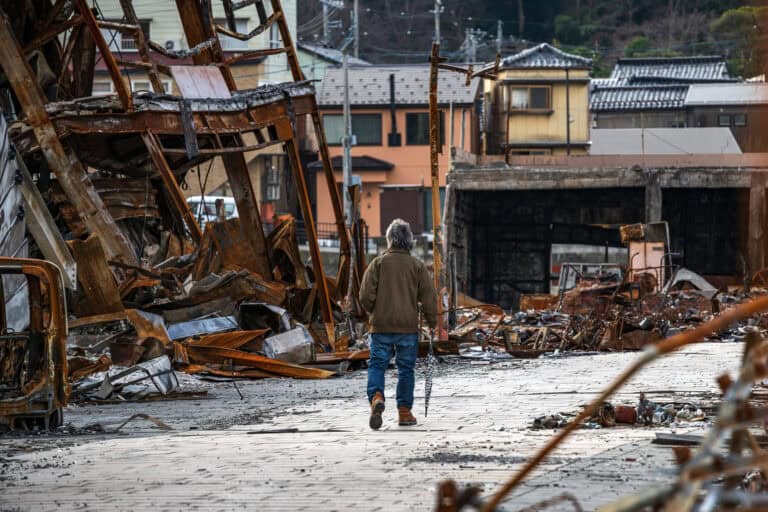
Illustrative image (Credit: mtaira / Adobe Stock)
A powerful offshore earthquake struck northern Japan in early December, prompting urgent tsunami warnings, mass evacuations, and significant regional disruption. The national meteorological agency confirmed that the quake reached high magnitude levels and issued immediate alerts for coastal areas in multiple prefectures. The event unfolded late at night, when most residents were indoors, heightening initial uncertainty and concern as authorities assessed both structural impacts and potential tsunami risk.
What Happened
According to national authorities and multiple news outlets, the earthquake originated off the northeastern coastline, with strong shaking recorded across several population centres. Seismic gauges registered intense levels in coastal cities, with some areas experiencing shaking severe enough to hinder basic mobility and cause unsecured objects to fall. Tsunami warnings were activated shortly after the quake struck, prompting local governments to instruct tens of thousands of residents to evacuate to higher ground while emergency teams surveyed the situation.
Reports from domestic and international sources indicate that while tsunami waves were later observed, their heights were lower than the maximum forecast. Advisory levels were subsequently reduced, but officials continued to caution the public about potential aftershocks. Transportation systems, including rail networks, temporarily suspended operations as safety inspections were initiated. Critical energy and industrial facilities in the region also underwent precautionary checks overnight.
Consequences and Immediate Challenges
While early reports suggest that widespread catastrophe was avoided, the event underscores the persistent and unavoidable seismic risk facing Japan’s northern coastline. Even moderate tsunami activity can threaten low-lying communities, ports, and coastal infrastructure. The earthquake also disrupted established emergency-response protocols, as multiple municipalities activated evacuation centres simultaneously, straining coordination networks and communication channels.
Operational impacts extended to suspension of key transit routes, temporary shutdowns of industrial operations, and emergency deployment of search-and-rescue units to investigate structural damage. Analysts noted that the timing of the earthquake — occurring late at night — complicated situational awareness during the first hours of response. Although injuries were reported, early indications suggest that rapid public compliance with evacuation orders contributed to avoiding more severe outcomes.
Context and Ongoing Considerations
Japan’s continued exposure to high-magnitude seismic activity places ongoing pressure on its disaster-preparedness frameworks. The December earthquake occurred along a historically active offshore zone, renewing discussions about long-term coastal resilience and the adequacy of current early-warning systems. Global seismologists have also highlighted the event as part of a broader pattern of tectonic activity in the northwest Pacific region, emphasising the unpredictable nature of subduction-zone earthquakes.
This incident arrives amid heightened national focus on infrastructure renewal, particularly in rural and coastal communities where aging buildings and limited population densities complicate disaster-management planning. The earthquake once again illustrates the reliance on accurate real-time monitoring and effective inter-agency communication to reduce casualty risks and guide evacuations under urgent conditions.
Key Lessons Moving Forward
The situation serves as a real-world stress test of community preparedness and emergency-response capability. Key priorities now emerging from analysts and emergency-management specialists include:
-
Enhanced tsunami-forecasting precision: expanding modelling capabilities to better predict wave height, arrival times, and coastal impact zones.
-
Strengthening evacuation logistics: improving transport routes, signage, and shelter capacity to accommodate rapid, large-scale movements.
-
Infrastructure hardening: accelerating retrofitting programs for buildings, seawalls, and lifeline systems in hazard-prone regions.
-
Communication integration: ensuring that alerts, advisories, and updates remain synchronised across national, regional, and local platforms.
A Systems Engineering Perspective
From a systems-engineering standpoint, the earthquake highlights the need for robust and resilient disaster-management architectures. Natural hazards are inherently uncertain, and no response framework can rely solely on nominal conditions. A resilient system anticipates cascading effects and maintains functionality across multiple levels:
-
System architecture: redundant alerting mechanisms capable of sustaining operation even under partial failure.
-
Failure detection and response: rapid activation of structural-integrity assessments, transportation shutdowns, and public-warning channels.
-
Lifecycle validation: continuous testing of evacuation procedures, communication pathways, and hazard-modelling tools to ensure readiness.
-
Human-factors integration: designing response plans that account for nighttime events, diverse populations, and varying levels of mobility and preparedness.
Such considerations demonstrate how systems engineering provides structured approaches for managing complexity, mitigating harm, and enhancing the safety of communities facing unpredictable natural hazards.
References:
-
Komiya, Kantaro & Katsumura, Mariko 2025, ‘Powerful 7.5-magnitude earthquake strikes Japan’s northeast’, Reuters, viewed 8 December 2025, <https://www.reuters.com/business/environment/japan-warns-3-metre-high-tsunami-after-magnitude-72-earthquake-2025-12-08/>
-
Yamaguchi, Mari 2025, ‘Magnitude 7.5 quake in northern Japan injures 23 people and triggers a 2-foot tsunami’ AP News, viewed 8 December 2025, <https://apnews.com/article/japan-quake-hokkaido-tusnami-alert-13b3149989918a8f860903ec48b1af92>
-
Speed, Jessica & Nagata, Kazuaki & Johnson, Jesse 2025, ‘Tsunami warnings lifted after M7.5 quake rocks northeastern Japan’ The Japan Times, viewed 8 December 2025, <Tsunami warnings lifted after M7.5 quake rocks northeastern Japan >
-
Martin, Patrick 2025, ‘Magnitude-7.6 earthquake in Japan prompts tsunami warning and evacuation order for 90,000 people’ ABC News, viewed 9 December 2025, <https://www.abc.net.au/news/2025-12-09/japan-earthquake-prompts-tsunami-warning/106117964?>
-
The Guardian 2025, ‘Japan tells residents to evacuate as powerful earthquake strikes north-east’, The Guardian, viewed 8 December 2025, <Japan tells residents to evacuate as powerful earthquake strikes north-east >