Get 15% off the standard course fee for new registrations. Offer valid for registrations paid by 31 Dec 2025.
Enter code CELEBRATE15 at checkout. T&Cs apply.

2511_Loudspeaker_Icon

Get 15% off the standard course fee for new registrations. Offer valid for registrations paid by 31 Dec 2025. Enter code CELEBRATE15 at checkout. T&Cs apply.

Systems Engineering Overview

(134 Reviews)
Rated 4.5 out of 5

Get Started Today

Register your interest now.

Let's Talk

This overview course is intended for participants and other stakeholders in technical projects who seek familiarity with systems engineering without themselves applying the principles and tools to engineering activities. Those in roles that interface with systems engineering activities will find the course especially relevant. We have found that is not possible to teach systems engineering in a three-day course to those who have to practice it to any substantial degree. Decades of experience in delivering systems engineering training support this view. However, an objective of achieving a common understanding of the nature and principles of systems engineering, viz. the systems approach to the engineering of systems, is certainly achievable.

Systems engineering can be thought of as the problem-independent and technology-independent principles of, and methods for, the engineering of systems, based on systems thinking. This 3-day Systems Engineering short course provides an overview of the principles and methods of systems engineering: an interdisciplinary, collaborative approach to the engineering of system solutions, adopted by leading enterprises worldwide, that aims to capture stakeholder needs, objectives and values, and to transform this problem definition into a holistic, life-cycle balanced system solution. This solution must satisfy the imperatives, and should optimize overall project and solution effectiveness according to the values of the stakeholders who are being served.

In course design and delivery, as you would expect, examples are used verbally in delivery, formally in courseware, and in the workshops. Verbal examples are always chosen to match the application domain(s) of the participants, to the maximum extent possible. Examples in courseware are diverse. The workshops, which play the major role in learning, relate to a single workshop system, the application of which anyone can understand. The design workshops for the same system are selected to match a diverse range of technology backgrounds.

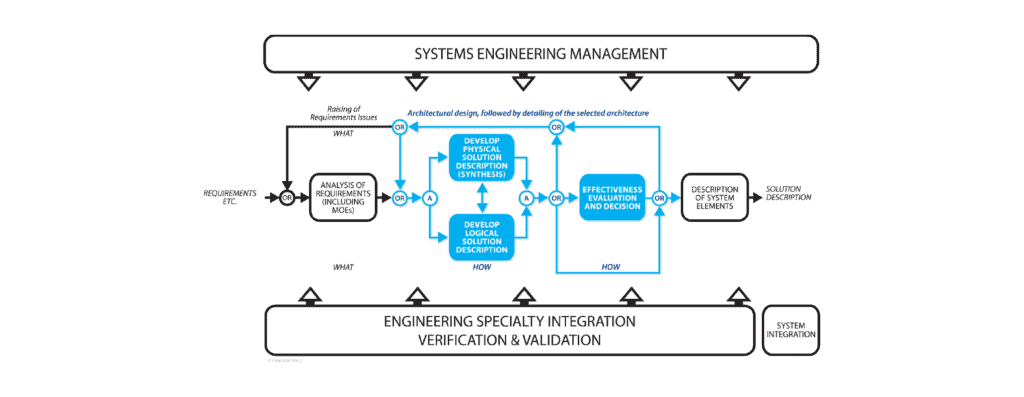
At the conclusion of the course, participants are expected to have a common understanding of SE principles, process elements with which to implement those principles, and their relationships. The process elements are requirements capture and validation (requirements analysis), physical and logical design, effectiveness evaluation and decision (the conduct of trade-off analysis), requirements specification, system integration, verification, validation, and systems engineering management. All of the above is within the context of typical life-cycle phases, such as problem definition, solution development, production, utilization, support and disposal. The different development styles of waterfall, incremental, evolutionary and spiral are emphasized, as is the practice of concurrent (simultaneous) engineering.

This introductory course does not require an engineering background. Systems engineering is primarily concerned with:

  • problem definition on a life cycle basis;
  • problem-solving;
  • verification that requirements have been satisfied;
  • validation that work products satisfy needs; and
  • management of the above.

Systems engineering does necessitate or develop an ability to think in abstract terms, as a means to the end of developing the right thing correctly, and showing that we have done so.

  • This course may be credited toward the maintenance of the INCOSE Certified Systems Engineering Professional (CSEP) certification for 24 Professional Development Units and PDUs may be claimed for PMI’s family of certifications, including PMP
  • This course qualifies for Engineers Australia and Engineering New Zealand (IPENZ) CPD purposes (24 hours)
  • This course may qualify for CPD, CLP and similar purposes with other organizations (24 instructor hours)
  • This course may be credited toward the maintenance of the Project Management Institute (PMI) certifications. Suggested PMI Talent Triangle® PDU allocation:
    • Ways of Working – 22
    • Power Skills – 1
    • Business Acumen – 1
Interested in corporate delivery? Click here and let's talk!

Interested in corporate delivery? Click the ‘Let’s Talk’ button above and enquire today!

Upcoming Courses

Register and pay 30 days prior to the course commencement date to receive a 10% early bird discount. Or register a group of 3+ for a 10% group discount. Available for corporate training worldwide.

P884-20-1
United States of America CST 8:00-16:30 (UTC -6:00) PPI Live-Online™
11 Feb - 13 Feb 2026
USD3130
P884-20-2
South America BRT 11:00-19:30 (UTC -3:00) PPI Live-Online™
(Exclusive to South America)
11 Feb - 13 Feb 2026
BRL6080
P884-20-3
Canada CST 8:00-16:30 (UTC -6:00) PPI Live-Online™
11 Feb - 13 Feb 2026
CAD3910
P884-21-1
Europe CET 9:00-17:30 (UTC +1:00) PPI Live-Online™
23 Mar - 25 Mar 2026
EUR2700
P884-21-2
United Kingdom GMT 8:00-16:30 (UTC +0:00) PPI Live-Online™
23 Mar - 25 Mar 2026
GBP2360
P884-21-3
South Africa SAST 10:00-18:30 (UTC +2:00) PPI Live-Online™
(Exclusive to South Africa)
23 Mar - 25 Mar 2026
ZAR24650
P884-21-4
Türkiye TRT 11:00-19:30 (UTC +3:00) PPI Live-Online™
23 Mar - 25 Mar 2026
EUR2700
P884-21-5
Saudi Arabia AST 11:00-19:30 (UTC +3:00) PPI Live-Online™
23 Mar - 25 Mar 2026
EUR2700
P884-22-1
Asia SGT 5:00-13:30 (UTC +8:00) PPI Live-Online™
30 Mar - 01 Apr 2026
SGD3270
P884-22-2
Oceania AEDT 8:00-16:30 (UTC +11:00) PPI Live-Online™
30 Mar - 01 Apr 2026
AUD3460
P884-23-1
United States of America MDT 8:00-16:30 (UTC -6:00) PPI Live-Online™
22 Jul - 24 Jul 2026
USD3130
P884-23-2
South America BRT 11:00-19:30 (UTC -3:00) PPI Live-Online™
(Exclusive to South America)
22 Jul - 24 Jul 2026
BRL6080
P884-23-3
Canada MDT 8:00-16:30 (UTC -6:00) PPI Live-Online™
22 Jul - 24 Jul 2026
CAD3910
P884-24-1
Europe CEST 9:00-17:30 (UTC +2:00) PPI Live-Online™
02 Sep - 04 Sep 2026
EUR2700
P884-24-2
United Kingdom BST 8:00-16:30 (UTC +1:00) PPI Live-Online™
02 Sep - 04 Sep 2026
GBP2360
P884-24-3
South Africa SAST 9:00-17:30 (UTC +2:00) PPI Live-Online™
(Exclusive to South Africa)
02 Sep - 04 Sep 2026
ZAR24650
P884-24-4
Türkiye TRT 10:00-18:30 (UTC +3:00) PPI Live-Online™
02 Sep - 04 Sep 2026
EUR2700
P884-24-5
Saudi Arabia AST 10:00-18:30 (UTC +3:00) PPI Live-Online™
02 Sep - 04 Sep 2026
EUR2700
P884-25-1
Asia SGT 5:00-13:30 (UTC +8:00) PPI Live-Online™
13 Oct - 15 Oct 2026
SGD3270
P884-25-2
Oceania AEDT 8:00-16:30 (UTC +11:00) PPI Live-Online™
13 Oct - 15 Oct 2026
AUD3460
(All prices exclude GST for Australian clients)

Upcoming Courses

Register and pay 30 days prior to the course commencement date to receive a 10% early bird discount. Or register a group of 3+ for a 10% group discount. Available for corporate training worldwide.

View by Region
P884-20-1
United States of America CST 8:00-16:30 (UTC -6:00) PPI Live-Online™
11 Feb - 13 Feb 2026
USD3130
P884-20-2
South America BRT 11:00-19:30 (UTC -3:00) PPI Live-Online™
(Exclusive to South America)
11 Feb - 13 Feb 2026
BRL6080
P884-20-3
Canada CST 8:00-16:30 (UTC -6:00) PPI Live-Online™
11 Feb - 13 Feb 2026
CAD3910
P884-21-1
Europe CET 9:00-17:30 (UTC +1:00) PPI Live-Online™
23 Mar - 25 Mar 2026
EUR2700
P884-21-2
United Kingdom GMT 8:00-16:30 (UTC +0:00) PPI Live-Online™
23 Mar - 25 Mar 2026
GBP2360
P884-21-3
South Africa SAST 10:00-18:30 (UTC +2:00) PPI Live-Online™
(Exclusive to South Africa)
23 Mar - 25 Mar 2026
ZAR24650
P884-21-4
Türkiye TRT 11:00-19:30 (UTC +3:00) PPI Live-Online™
23 Mar - 25 Mar 2026
EUR2700
P884-21-5
Saudi Arabia AST 11:00-19:30 (UTC +3:00) PPI Live-Online™
23 Mar - 25 Mar 2026
EUR2700
P884-22-1
Asia SGT 5:00-13:30 (UTC +8:00) PPI Live-Online™
30 Mar - 01 Apr 2026
SGD3270
P884-22-2
Oceania AEDT 8:00-16:30 (UTC +11:00) PPI Live-Online™
30 Mar - 01 Apr 2026
AUD3460
P884-23-1
United States of America MDT 8:00-16:30 (UTC -6:00) PPI Live-Online™
22 Jul - 24 Jul 2026
USD3130
P884-23-2
South America BRT 11:00-19:30 (UTC -3:00) PPI Live-Online™
(Exclusive to South America)
22 Jul - 24 Jul 2026
BRL6080
P884-23-3
Canada MDT 8:00-16:30 (UTC -6:00) PPI Live-Online™
22 Jul - 24 Jul 2026
CAD3910
P884-24-1
Europe CEST 9:00-17:30 (UTC +2:00) PPI Live-Online™
02 Sep - 04 Sep 2026
EUR2700
P884-24-2
United Kingdom BST 8:00-16:30 (UTC +1:00) PPI Live-Online™
02 Sep - 04 Sep 2026
GBP2360
P884-24-3
South Africa SAST 9:00-17:30 (UTC +2:00) PPI Live-Online™
(Exclusive to South Africa)
02 Sep - 04 Sep 2026
ZAR24650
P884-24-4
Türkiye TRT 10:00-18:30 (UTC +3:00) PPI Live-Online™
02 Sep - 04 Sep 2026
EUR2700
P884-24-5
Saudi Arabia AST 10:00-18:30 (UTC +3:00) PPI Live-Online™
02 Sep - 04 Sep 2026
EUR2700
P884-25-1
Asia SGT 5:00-13:30 (UTC +8:00) PPI Live-Online™
13 Oct - 15 Oct 2026
SGD3270
P884-25-2
Oceania AEDT 8:00-16:30 (UTC +11:00) PPI Live-Online™
13 Oct - 15 Oct 2026
AUD3460
(All prices exclude GST for Australian clients)

Key Learning Objectives

At the conclusion of this course, participants are expected to have learned:

  • the overall concepts which are characteristic of a systems approach to engineering;
  • the overall process elements, and their relationships, which collectively constitute the building blocks of systems engineering;
  • the role of Model-Based Systems Engineering (MBSE);
  • how to relate the roles of developer as supplier, developer as creator, and developer as acquirer, and to place their own roles, and those of their customers (internal and external) and suppliers (internal and external) within this framework;
  • how to perform some of the basics of some of the more important techniques of system requirements analysis, development of physical solution, development of logical solution, evaluation of solution alternatives (trade-off studies) and design iteration; and
  • some of the principles and major techniques of engineering management in a systems project context.

Training Methods and Materials

The course is delivered using a mixture of formal presentation, informal discussion, and workshops that exercise key aspects of systems engineering on a single system through a development life cycle. The Systems Engineering training makes use of workshops to put into practice the techniques covered in theory sessions.

You will be provided with:

  • comprehensive Systems Engineering Overview course notes containing presentation material
  • a Workbook containing workshop exercises, with worked examples also distributed in most cases
  • numerous supplementary descriptions, checklists, forms and charts which you can put to use immediately
  • complimentary access to PPI’s evolving Systems Engineering Goldmine.

Who Should Attend This Course?

This Systems Engineering Overview course is intended for people who interface with systems engineering activities, but do not need to perform these activities themselves in any substantial way. The course will be of particular value to people with job titles such as:

  • Product Manager
  • Project Director
  • R and D Manager
  • Engineering Manager
  • Test and Evaluation Manager
  • Test Engineer
  • Specialty Engineer
  • Project engineer
  • Logistic Support Analysis (LSA) Specialist
  • Industrial Engineer
  • Production Manager
  • Configuration Manager
  • Human Resources Manager
  • Marketing Manager
  • Other project-related job titles
  • and their staff.

Do you Offer Tailoring of this Course?

Yes. All courses are tailored informally verbally in delivery by selecting, where possible, examples matched to the domains of interest to the class. We can also work with you to design a formally customized curriculum for the development of your people. We have done so for many client companies, and we would love to work with you to this end. We always suggest that a client takes the corresponding standard course prior to any customization. For systems engineering, this is because systems engineering is the problem-independent and solution technology-independent principles and supporting methods for the engineering of systems, based on systems thinking. So the objectives of customization need to be very clear and focused on adding further value. In practice, customization, if performed, usually becomes the replacement of examples and possibly the main workshop system with domain-specific equivalents. Substitution of the workshop system usually involves substantial redevelopment of courseware. Out of necessity, formal tailoring of courseware is performed on a fee basis.

0. The Business Case for Systems Engineering (0.3 hours)

1. The System Life Cycle and Solution Development (3.7 hours)

  • Defining the problem
    • Information, relationships, and artifacts of problem definition
  • The solution domain: key concepts, relationships, and work products
    • Problem versus solution
    • Architectural/conceptual/preliminary versus detail
    • Scalability and recursion
    • Complexity
    • Top down, bottom up, “in-between”
  • Life cycle processes and models
  • Classes of stakeholders
  • Configuration items and baselines
  • Waterfall, incremental, evolutionary and spiral developments strategies
  • Agile, concurrent (simultaneous) engineering, Product Line Engineering (PLE)
  • Digital engineering, digital thread, digital twin
  • Impact of AI
  • Why a life cycle view – need to disposal?
  • Summary of key points

2. Principles, Concepts and Elements (4.75 hours)

  • Workshop – principles of the engineering of systems
  • Some more systems concepts
  • Foundation concepts of Model-Based Systems Engineering (MBSE) in the problem and solution domains
  • The case for MBSE
  • The engineering overhead complexity trade-off
  • SE process model and elements
  • Requirements analysis (capture and validation)
  • Physical design (how to build)
  • Logical design (how it is to work)
  • Effective evaluation, decision and design optimization
  • Specification of system elements
  • System integration
  • Specialty engineering
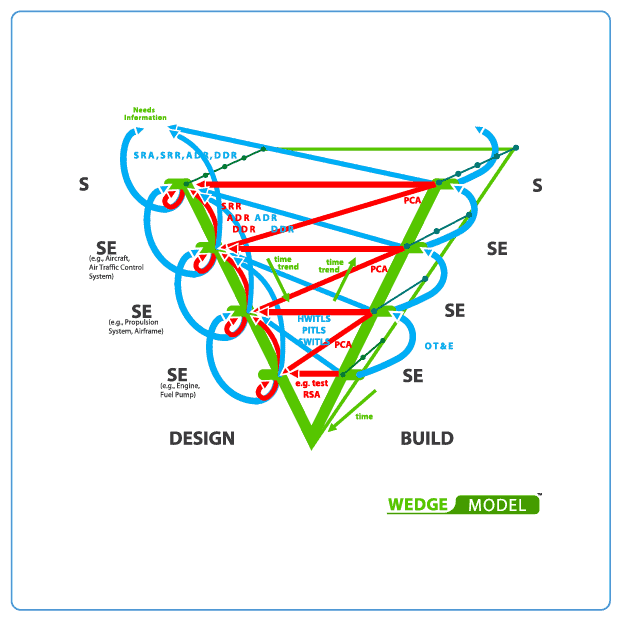
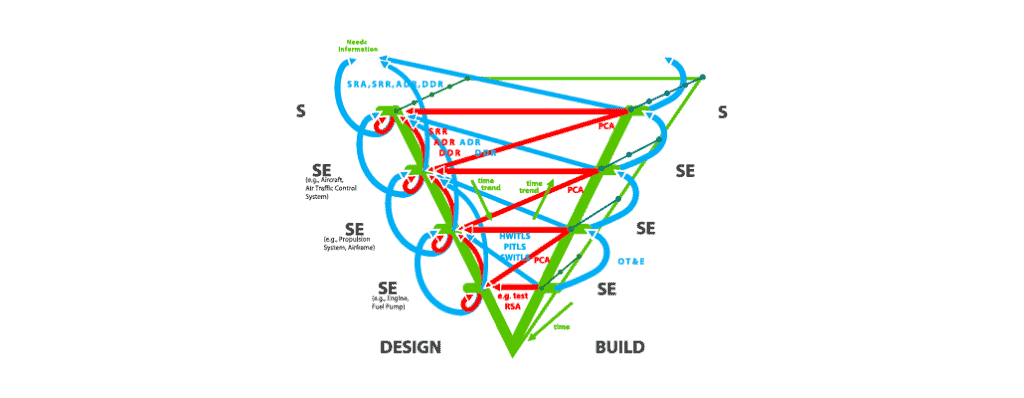
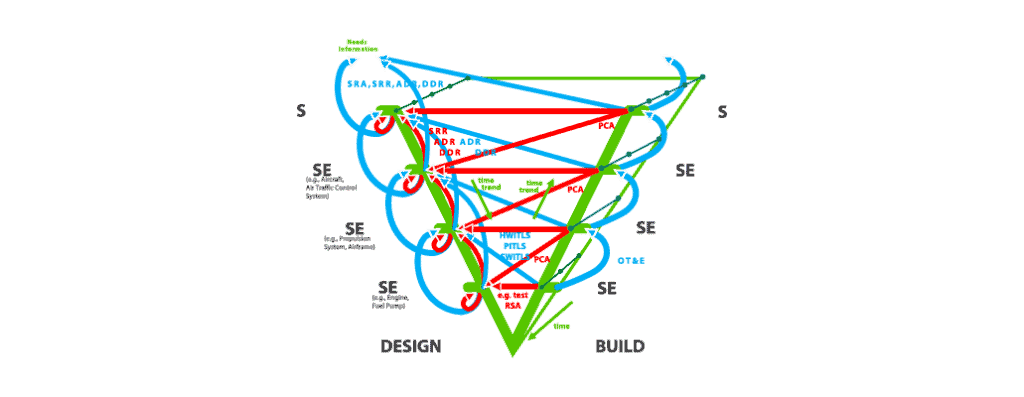
  • Subjects, references and methods of verification and validation related via the “Vee” model, the “Wedge
    Model”
  • Workshop – matching common activities to the SE process elements (shortened)
  • Work product attributes
    • Requirements traceability
    • Design traceability
    • Verification traceability
  • SE and SE-related standards
  • Relationship of SE to other engineering disciplines
  • Summary of key points

3. Requirements Analysis – Capture and Validation (7.7 hours)

  • Types of requirements
  • RA methodology
  • Workshop – context analysis
  • Exercise – design requirements analysis
  • Exercise – states and modes
  • Workshop – parsing analysis of example requirements
  • Workshop – functional analysis in requirements analysis
  • Software tools supporting requirements management and requirements analysis
  • Common pitfalls in performing requirements analysis

4. Physical Solution Definition Part A (0.9 hours)

  • Technology and innovation in solution development
  • Generic influences in defining configuration items

5. Logical Solution Definition (3.0 hours)

  • Types of logical representation
  • Functional analysis in design – how to do it
  • Functional design/architecture process
  • Workshop – physical/functional design
  • Performance threads
  • Behavior modeling, UML, SysML, proprietary languages
  • Software tools supporting logical and physical design

6. Physical Solution Definition Part B (1.0 hour)

  • What next? – FMECA, FTA, ETA, …..
  • Object-oriented design
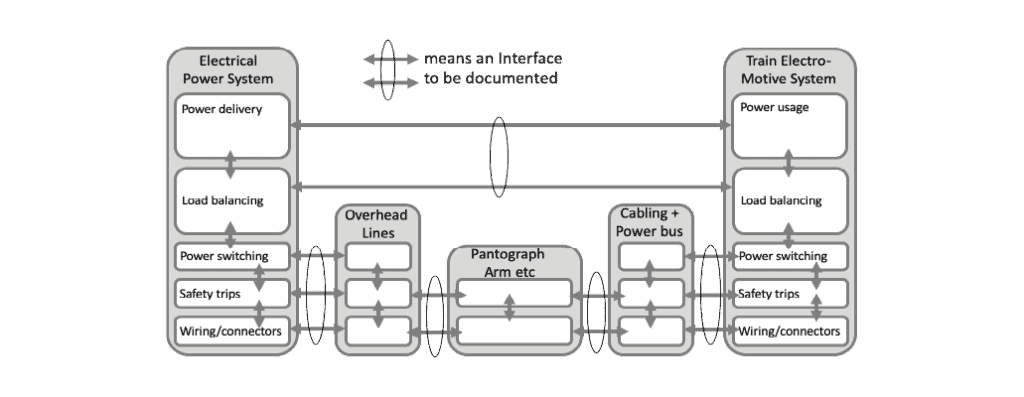
  • Interface engineering, common interfacing pitfalls
  • Summary of key points

7. Effectiveness Evaluation, Decision & Solution Optimization (1.0 hour)

  • Approaches: AHP, MAUT, QFD
  • Workshop – engineering decision-making
  • Multiple stakeholders, multiple uses, event-based uncertainty
  • Solution optimization
  • Software tools supporting effectiveness evaluation and decision

8. Requirements Specification Writing (0.2 hours)

  • The ten requirement specification types and their uses
  • Requirements specification structure principles

9. System Integration (0.2 hours)

  • Integration planning
  • Integration activities
  • Integration strategies (nine)
  • Integration testing
  • Configuration audits related to system integration – RSA (FCA), BS/BS Correspondence (PCA)
  • Qualification
  • Summary of key points

10. Verification and Validation (0.2 hours – the subject is covered incrementally with the other modules)

  • Technical reviews
    • Requirements reviews
    • Principles of design review
    • Architectural design review (ADR – PDR)
    • Detail design review (DDR – CDR)
    • Requirements satisfaction audits (FCAs)
    • Design description (BS-BS) audits (PCAs)
    • Technical reviews and incremental builds
    • Administration of technical reviews
  • Technical performance measurement
  • Test and evaluation
  • Other verification and validation methods and tools
  • Summary of key points

 11. Engineering Management (0.2 hours – the subject is covered incrementally within the other modules)

  • Planning the engineering
  • Integrating engineering specialties
  • Engineering team structure
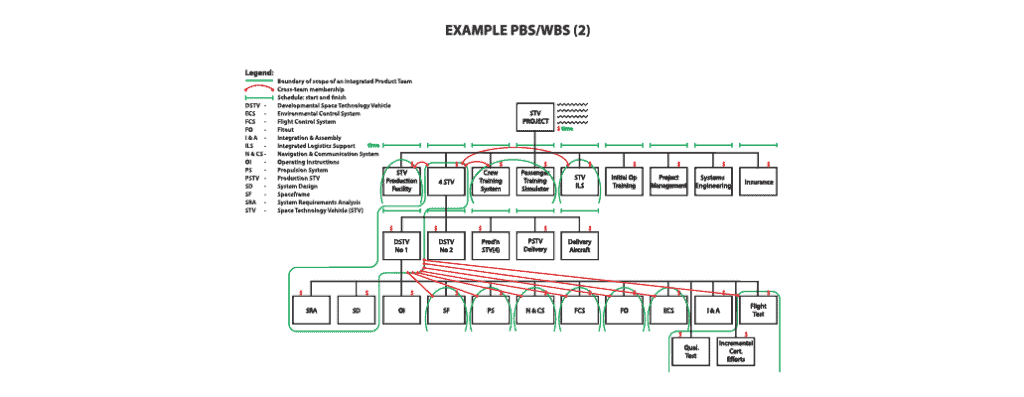
  • Management frameworks – Specification Tree, Project Breakdown Structure (PBS – WBS)
  • Managing configuration
  • Managing interfaces
  • Managing residual risk
  • Summary of key points

 12. Summary (0.1 hours)

  • Key points revisited
  • Tailoring of SE methods to specific activities or projects
  • Getting the most out of systems engineering methods
  • SE implementation strategy

Featured Course Reviews

USA Flag

The presenter is certainly a treasure trove of all things systems engineering and is undoubtedly passionate about spreading the wealth of this information to those hungry enough for growth in this area!

Patricia Briscoe, USA

Sandia

USA Flag

Such an informative course, and the extensive material provided will be so valuable to use as reference. I really appreciated the effective way in which the presenter taught this course, it made for a very enjoyable and productive 3 days.

Participant, USA

Sandia

USA Flag

The simultaneous visuals of the slides, the whiteboard and the instructor worked very well for this online delivery. Breakout rooms were well set, up allowing the sessions to run so smoothly.

Participant, USA

Sandia

USA Flag

I very much enjoyed the class. Robert is a certainly a treasure trove of all things systems engineering.

Participant, USA

Sandia

Shopping Cart
Scroll to Top